
Prime Minister Narendra Modi will address the nation tonight at 8.30 PM, a day after a bill to implement women's reservation in legislatures was defeated in the Lok Sabha.

Prime Minister Narendra Modi has accused the Trinamool Congress (TMC) of betraying women by obstructing the passage of the Constitution (131st Amendment) Bill, 2026, which aimed to reserve 33 per cent of seats in Parliament and state assemblies for women. Modi asserted that women in West Bengal would punish the TMC in the upcoming assembly elections.

Ideology is dead; long live the numbers game that is being played with the sole intention of securing a two-third majority in the Lok Sabha for the NDA, observes Nilanjan Mukhopadhyay.

Union Health Minister J P Nadda launched a scathing attack on the TMC in West Bengal, accusing it of appeasement politics, shielding infiltrators, and presiding over a corrupt and lawless regime.

The Congress party has accused the government of scheduling a 'special session' to pass bills related to women's quota and delimitation with the intention of gaining political advantage in the upcoming West Bengal and Tamil Nadu elections, calling it a violation of the model code of conduct.

'All this talk about women's reservation and Nari Shakti is a mirage.' 'It is a classic Trojan horse to bring about an alteration in the structure of political competition -- to the enduring advantage of the BJP.'

The Union Cabinet has reportedly approved the Kerala government's proposal to officially change the state's name to Keralam, following a resolution passed by the Kerala Assembly.

The INDIA bloc faces challenges after recent state election defeats for key members like TMC and DMK, potentially shifting internal dynamics and leadership considerations.

What is missing in the BJP's armour is dominance over 50 percent of the electorate: Women. And this is a gamble Modi-Shah have indicated that they are willing to take, explains Saisuresh Sivaswamy.

Kerala's voters are sophisticated, educated, and unforgiving. They have once again made it clear that no government is entitled to remain in power. The Congress would do well to remember this, points out Ramesh Menon.

The power sector presents a puzzle. A fast-growing economy should be aligned to higher power demand but that hasn't been the case in the financial year 2026 till date (FY26TD).
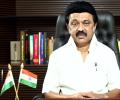
Tamil Nadu Chief Minister and DMK president M K Stalin announced that his party will file a case in the Supreme Court against the Waqf Bill passed in the Lok Sabha. The opposition AIADMK expressed solidarity with the DMK's stance, while the BJP members staged a walkout from the Assembly in protest. The CM argued that the amendment was passed at the behest of a few allies despite opposition from majority parties and that it is an attack on the Constitution and religious harmony. The DMK claims the bill threatens the autonomy of the Waqf Board and the Muslim minority population.

'The BJP lacks a credible mass leader who matches Mamata Banerjee's popularity.' 'Given the division of votes among Opposition parties, the West Bengal government's dole-giving strategy, and the consolidation of the poor, significant sections of scheduled caste groups and Muslim minorities behind the ruling party, it will be difficult to dislodge the Trinamool from power.'
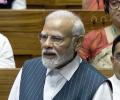
The Congress on Wednesday hit out at the government over the women's reservation bill, saying the only appropriate description of what Prime Minister Narendra Modi has done with the matter is "it is a post-dated cheque drawn on a failing bank".

'Experts and stakeholders have raised concern over the refund provision in the draft Bill. That was a drafting error, which will be rectified,' a government official said.

The provisions in the Constitution (128th Amendment) Bill make it clear that the women's reservation will come into effect only after the delimitation exercise or the redrawing of constituencies taking into account the data of the census conducted once the bill becomes a law.

The Union Cabinet on Wednesday approved the proposal for 'one nation, one Election' as recommended by the Kovind panel, Union minister Ashwini Vaishnaw said on Wednesday.

A high-level committee on Thursday recommended simultaneous elections for Lok Sabha and state assemblies as the first step followed by synchronised local body polls within 100 days.

Here's what you must know about the new rule, its implications, and whether it affects taxpayers' rights and privacy.
